Signs of a gambling problem — warning signs, the PGSI self-assessment and when to get help
Last reviewed: 19 May 2026
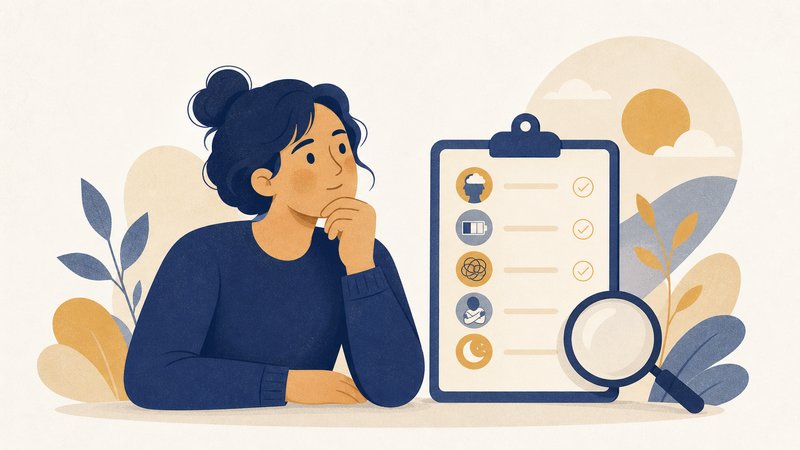
Gambling problems rarely arrive all at once. They build quietly, and the earliest signs are easy to explain away. Recognising them early makes them much easier to address. None of the points below is a diagnosis — but if several feel familiar, it is worth talking to someone.
Common warning signs
- Betting more money or more often than planned, or needing bigger stakes to feel the same buzz.
- Trying to win back losses by gambling more — often called "chasing losses".
- Borrowing money, selling things or missing bills to keep gambling.
- Feeling restless or irritable when trying to cut down or stop.
- Hiding how much time or money goes on gambling from family or friends.
- Gambling to escape stress, low mood or anxiety rather than for entertainment.
The PGSI self-assessment
The Problem Gambling Severity Index (PGSI) is the most widely used way to gauge gambling risk. It asks nine questions about the past year — for example, whether you have bet more than you could afford to lose, needed to gamble with larger amounts to get the same feeling, or felt guilty about gambling. Each answer scores from 0 ("never") to 3 ("almost always"), giving a total between 0 and 27. Clinicians also use the criteria in the DSM-5, but the PGSI is the simplest place to start because you can complete it yourself.
What the total broadly indicates:
- 0 — no problem-gambling indicators.
- 1–2 — low level of risk.
- 3–7 — moderate risk; some negative consequences may already be showing.
- 8 or more — the level used to identify problem gambling. Support is strongly recommended.
A self-assessment is a prompt to reflect, not a medical verdict. If your score is higher than you expected, that is a reason to reach out — not a label.
How common is each level?
Putting individual worry into context can help. The chart below shows how adults in Great Britain fall across the PGSI bands, based on official statistics.
Embed or cite this chart
<p><a href="https://onlinegamblinghelp.com/signs-of-a-gambling-problem/">Gambling risk in Great Britain (PGSI), 2024</a> — data: Gambling Commission, Open Government Licence v3.0.</p> When to get help
There is no threshold you have to reach before you are "allowed" to ask for help. If gambling is affecting your money, mood, sleep, work or relationships — or if someone close to you has raised it — that is enough. Free, confidential support is available whether you want to stop completely or simply cut back. The practical steps on how to stop gambling online are a good next move, and self-exclusion can put a barrier in place straight away.
It also matters who notices first. Sometimes the clearest sign is not on any checklist but in the reactions of people around you — a partner asking where money has gone, or a friend pointing out how much time betting now takes. Their concern is worth taking seriously even if you feel in control, because gambling harm is often easier for others to see than for the person living with it.
To talk to someone now, call the UK National Gambling Helpline free on 0808 8020 133, or find your national service on the help by country page. If you are worried about someone else, you will find family support listed there too.